
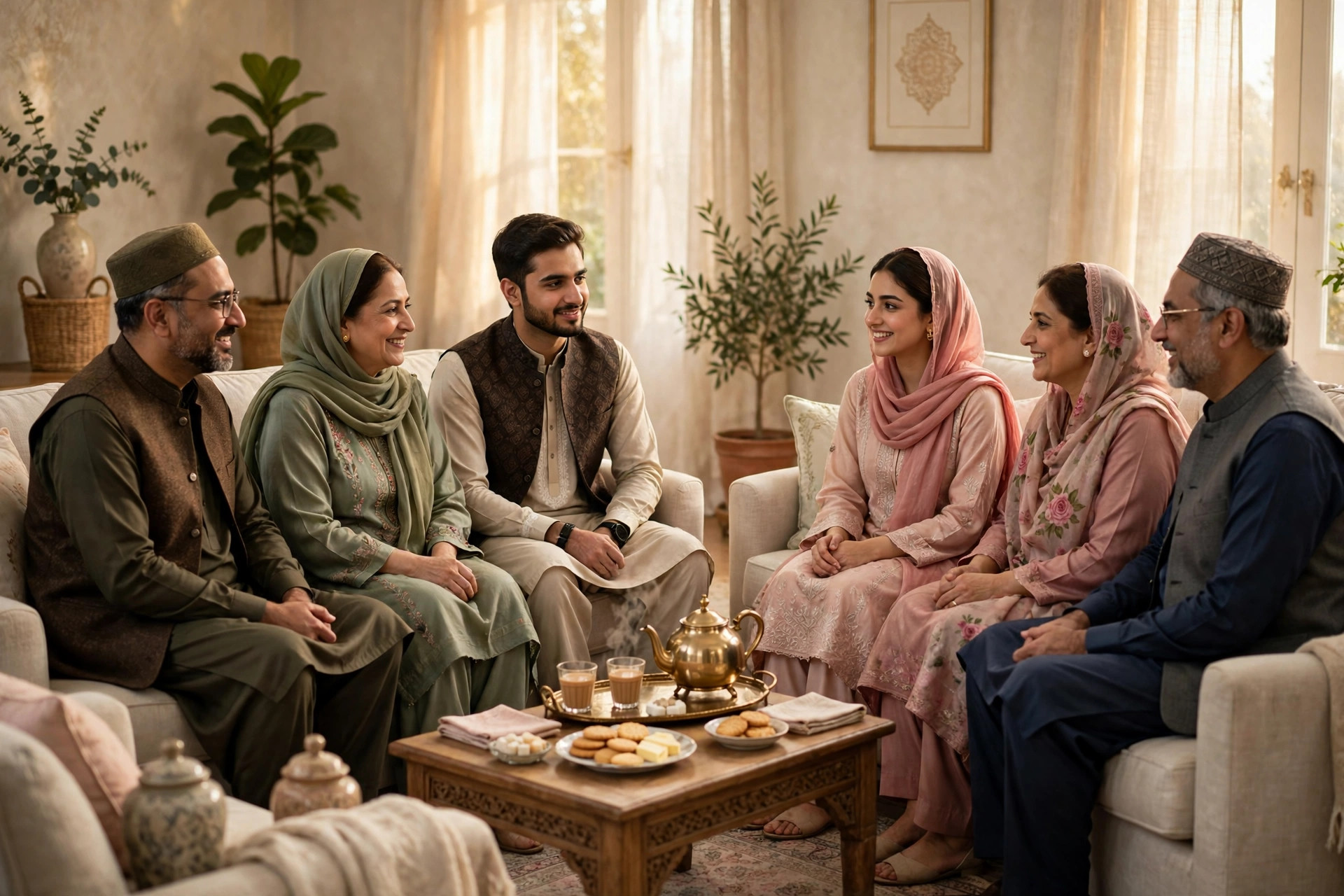
The first rishta meeting makes almost everyone nervous, and that is completely normal. Two families are trying to decide whether a second meeting makes sense, not whether to sign anything that day. The goal of the first meeting is simple: leave with a clear, honest impression of the person and their family, and give them the same of you. Good questions help, as long as they are asked like conversation and not like an interrogation.
Setting the meeting up well
Choose a setting where everyone can talk comfortably. For most Karachi families, a first meeting at home with elders present remains the most respectful option, and it lets both families observe the things no profile can show: how people speak to each other, how guests are treated, how the home runs. Keep the first meeting to about an hour. Agree beforehand who will be present, so there are no surprises, and make sure the boy and girl get some time to speak directly, with family nearby as your custom prefers.
Gentle openers that break the ice
Start with the easy ground. Ask about their work or studies and what a normal week looks like. Ask about the area they live in, how long the family has been there, and the small things: books, food, travel, how weekends are spent. These questions sound light, but they reveal routine, temperament and lifestyle, which is exactly what a marriage is made of. Share your own answers too. A meeting where one side only asks and the other only answers feels like a test, and nobody does well in it.
The questions that actually matter
Values and deen
Ask, kindly, about the place of faith in daily life: prayer, fasting, the kind of home they hope to build. You are not checking a score; you are checking whether your directions match.
Career plans and finances, at the right level
It is fair to ask about work, plans for the next few years, and whether a wife's career, if she has one, is welcomed and supported. It is not the day for payslips and account balances. What matters at this stage is direction, stability and attitude: does this person take responsibility, and are their plans spoken about honestly?
Where you will live
Joint family or separate home is one of the most common sources of friction after marriage, so it deserves one clear, calm conversation early. Ask where the couple would live after the wedding and how the family sees the arrangement working in practice. There is no single right answer. There is only the answer both sides understand before things go further.
Relocation and life abroad
If one side lives overseas or hopes to move, ask about timelines and expectations openly. Will the spouse be sponsored, how soon, and what does life look like in that country for a new family? Many proposals quietly fail months later on exactly these unasked questions.
Timeline for the wedding
Ask when the family is thinking of holding the nikah and wedding if things go well. A family ready in three months and a family thinking of two years are both reasonable, but they should not discover the difference after emotions are involved.
Questions to save for later meetings
Avoid detailed questions about past proposals and why they ended, medical history beyond the serious and relevant, exact income figures, and anything about past relationships. Some of these topics do matter before a final decision, and families usually raise them through the bureau or an elder at the right stage. Asked across a first cup of tea, they only create defensiveness and end meetings that might have gone well.
Involving both families with respect
Let elders speak for the family's side, but make sure the boy and girl are not silent exhibits in their own marriage discussion. If your family uses a bureau or a middleman, brief them honestly afterwards about your impressions, including the doubts. A good matchmaker would rather hear "we liked the family but we are unsure about the living arrangement" than a polite yes that collapses later.
After the meeting: deciding the next step
Do not decide in the car on the way home. Sleep on it, pray istikhara, and let each family member say their view without pressure. Then communicate clearly and promptly through the agreed channel: yes to another meeting, a polite no, or a specific question you would like answered first. A clear no delivered kindly is a favour to everyone. Ghosting a family you met is remembered, and Karachi's rishta circles are smaller than they look.
If you are at the start of this journey, create your free profile and let our team help you reach first meetings with verified families who are just as serious as you are.